Project 03 · Written with Ryan Kang
Nuclear Fusion, A Quantitative Survey
A research paper on fusion theory, the two reactor engineering approaches that actually get used, and the newer work pushing net energy gain closer to reality, like AI based instability prediction and liquid metal wall materials.
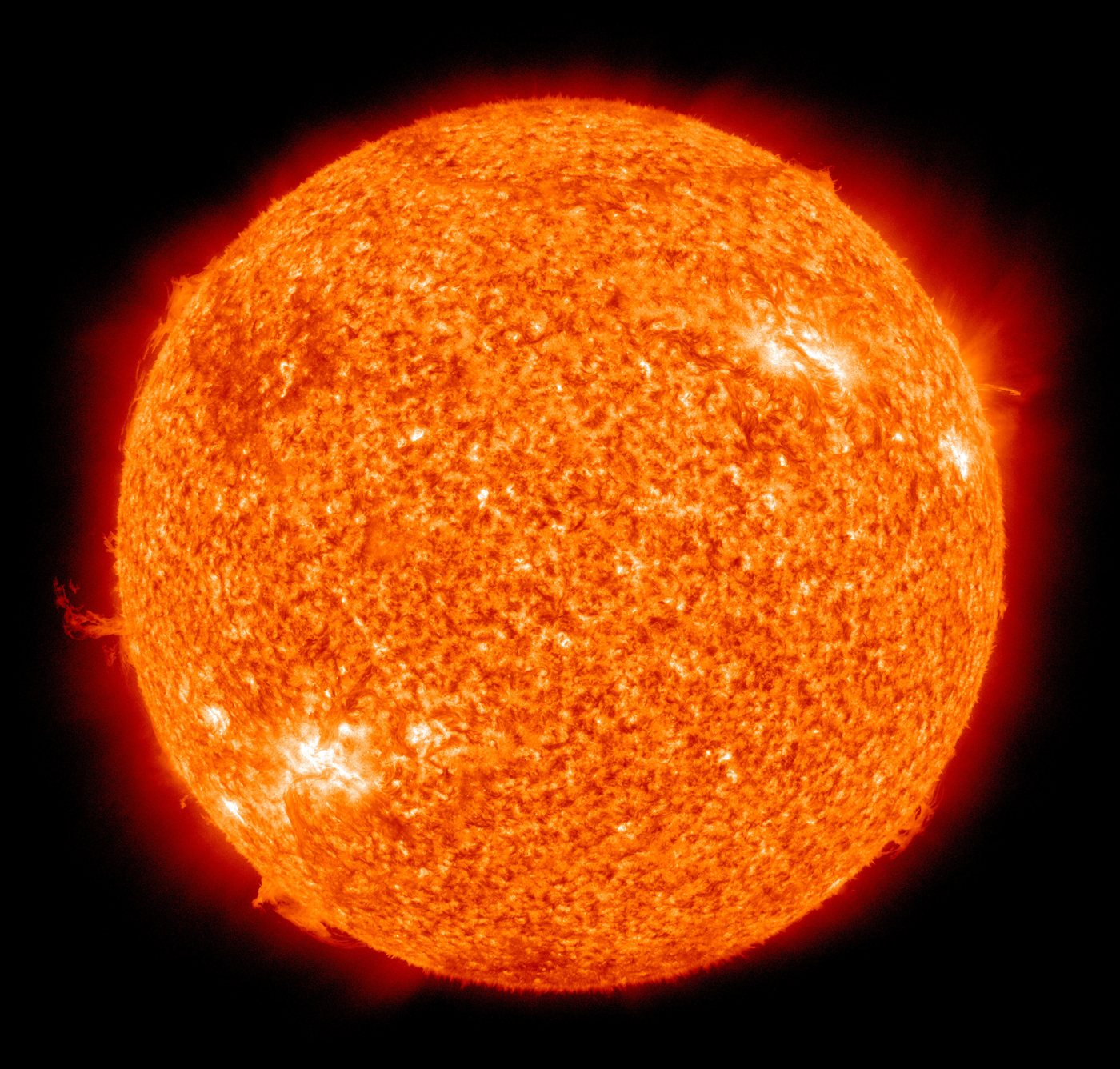
NASA/SDO (AIA), public domain
- Sources cited
- 34
- Confinement methods covered
- 2
- Target D-T fusion temperature
- 150M K
- AI tearing-mode prediction lead
- 300ms
I wrote this with Ryan Kang and we split it evenly across the theory and the engineering methods. It is not related to my other projects, and it is here as a writing and research sample instead of a propulsion piece. The paper works through the real derivations instead of only describing the concepts, and it is upfront about where it stops. One derivation in the theory section was past what we could do from first principles, and we say that directly in the paper instead of hand waving past it.
Two ways to satisfy Lawson's Criterion
The criterion needs the product of ion density and confinement time to clear a threshold, and there are two opposite ways to get there.
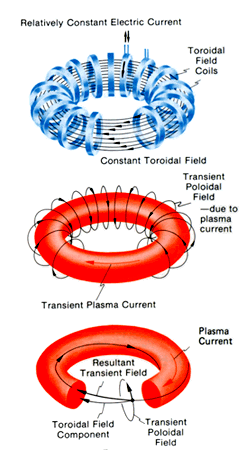
Magnetic confinement
Hold it for a long time, at low pressure
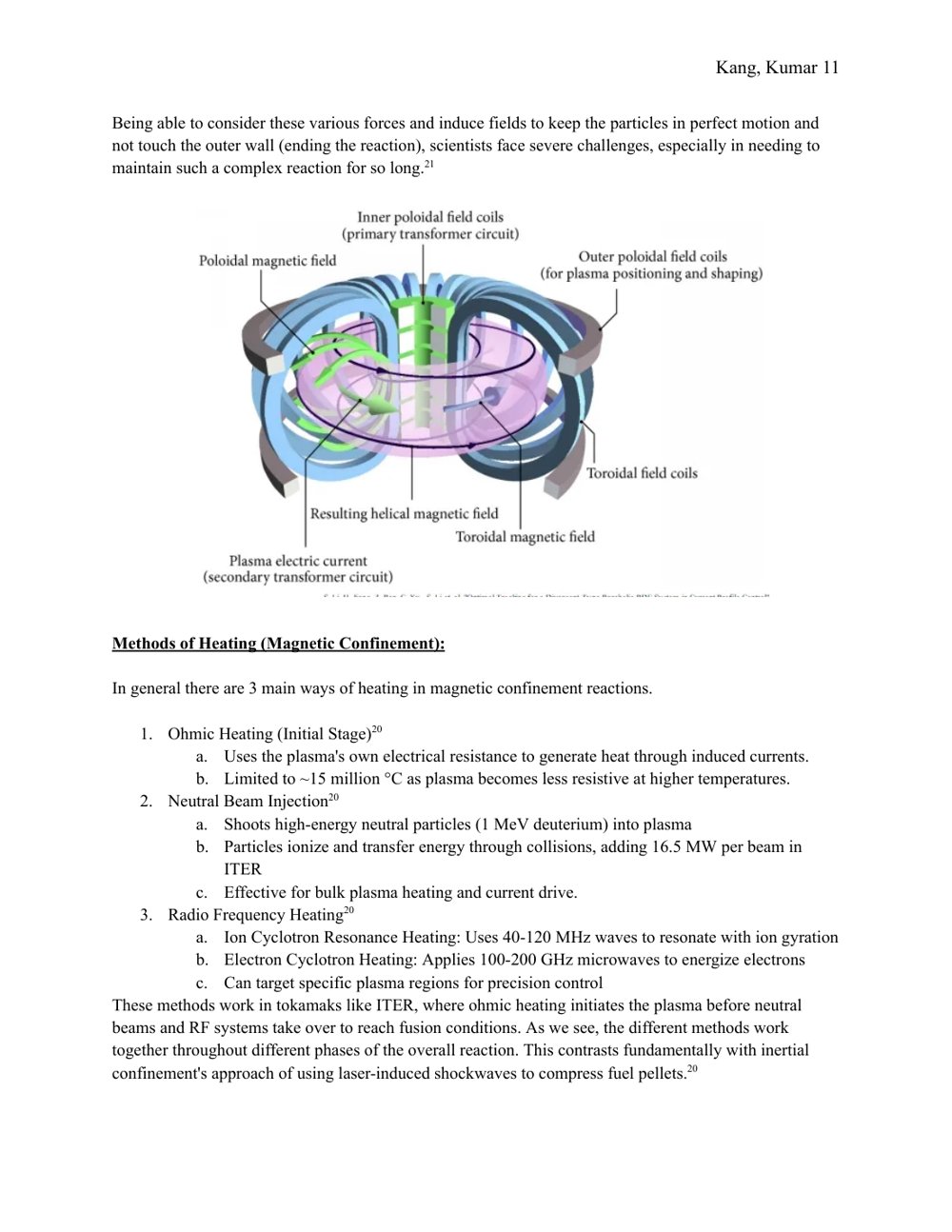
A tokamak's toroidal and poloidal fields combine into a helical field that keeps the plasma off the walls, and reactions can run for minutes.
U.S. Dept. of Energy, public domain
Inertial confinement
Hold it for nanoseconds, at extreme pressure
High powered lasers implode a fuel pellet so fast that the nuclei fuse before they can move apart, and the shell's own inertia is what does the confining.

B. D. Esham / U.S. Government, public domain
01
Theory
We derive the energy released by hydrogen to helium fusion straight from the mass defect and E=mc², then work through why fusion is hard in the first place. That comes down to the Coulomb barrier, and how the Sun gets around it with pressure and quantum tunneling. On Earth it means picking the right fuel, which we get to through fusion cross-sections, and then hitting the temperature and confinement time that Lawson's Criterion asks for.
02
Engineering methods
This covers the two approaches real reactors use. Magnetic confinement gets tokamak geometry, gyrocenter and particle motion, and the three heating methods ITER runs. Laser inertial confinement gets the Shiva and Nova systems at Lawrence Livermore. We tie each one back to the side of Lawson's Criterion it is solving for, either long confinement at low pressure or extreme pressure for nanoseconds.
03
Modern advancements
Tearing instabilities and magnetic islands, including how Princeton's AI based predictive control forecasts a tearing instability up to 300ms before it happens instead of reacting after the fact. We also get into liquid lithium wall coatings as an alternative to solid tungsten and beryllium liners.
04
Looking to the future
An honest look at what is still unsolved. Reactors are barely past net energy gain, tritium fuel is not naturally abundant, and funding is getting cut right now. We read all of that as an engineering and economics problem and not only a physics one.
Read the paper
22 pages and 34 cited sources, with worked derivations for the mass defect, the Coulomb barrier and Lawson's Criterion.
Open full PDFImage credits: solar image NASA/SDO (AIA), tokamak field diagram U.S. Department of Energy, inertial confinement diagram Benjamin D. Esham after a U.S. Government original. All of them are public domain.